Sage 300 CRM
Sage 300 CRM users can access accounting data without needing direct access to the Sage 300 application or consuming a Sage 300 license for day-to-day visibility.
The Sage 300 integration is published by Sage, and customers current on their support plan are eligible for one free Sage CRM license. The value proposition highlighted in the source content is that staff can work in Sage CRM with familiar Sage 300 functionality at a fraction of the cost of a Sage 300 license.
Table of Contents
Features and benefits
Features
- Customer and vendor integration.
- User rights can be defined for Sage 300 data.
- Companies in Sage CRM can be promoted to customers or vendors in Sage 300.
- Users can view order and invoice history from Sage CRM.
- New quotes and orders can be created in Sage CRM and populated into Sage 300.
- Inventory quantities can be looked up from CRM.
Benefits
- CRM users are more informed about their accounts.
- Users can self-serve information without calling accounting.
- The need for Sage 300 licensing is reduced.
- Duplicate entry is minimized.
- Remote staff can participate in order entry.
Customer integration
Customer record
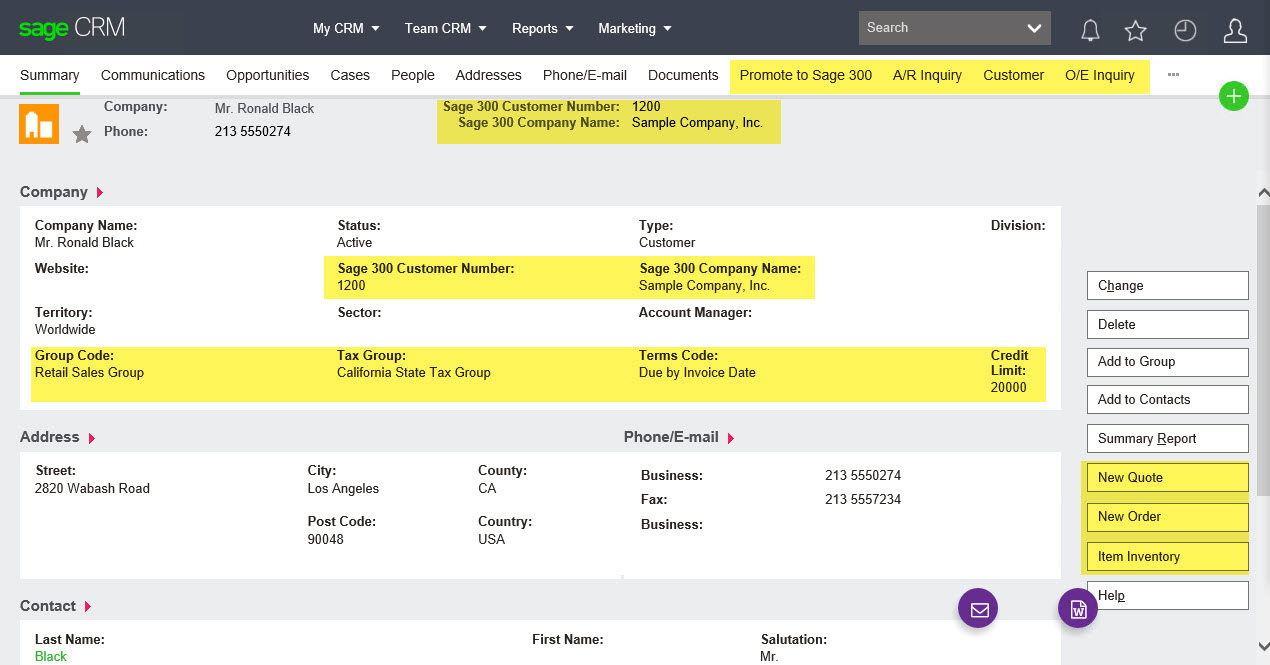
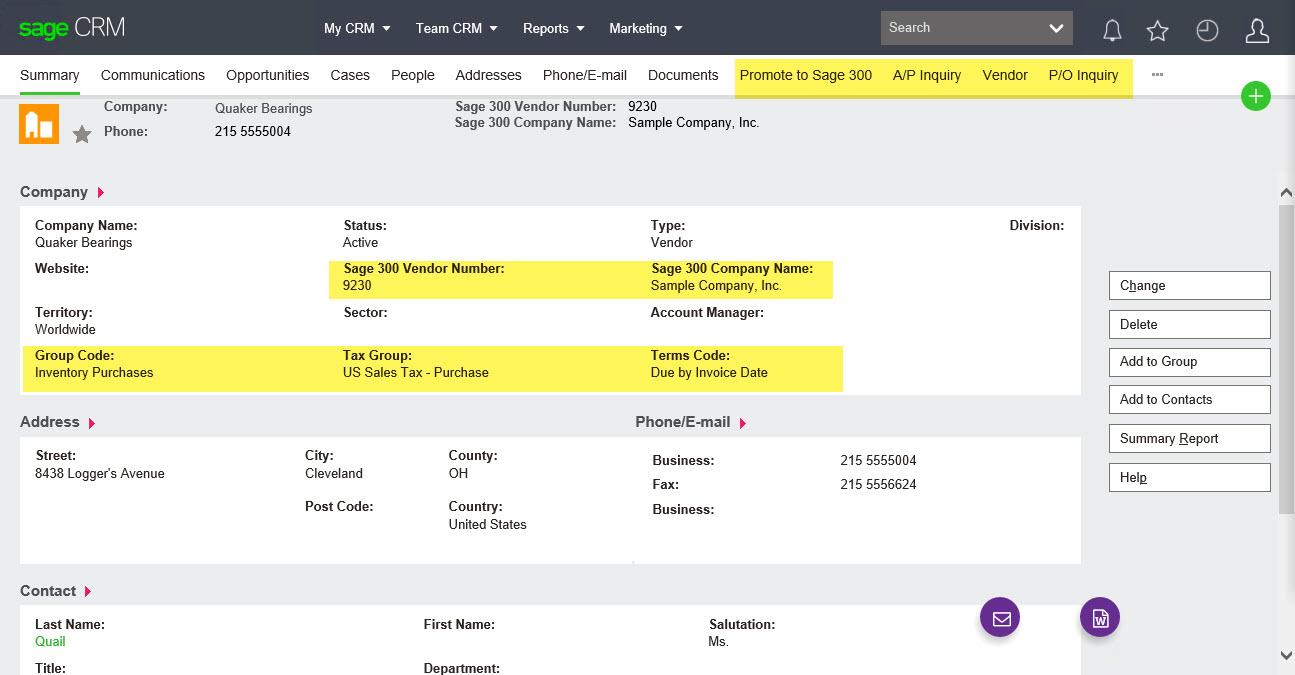
From a customer or vendor record in Sage CRM, users can see key Sage 300 fields and access important Sage 300 functions. The source page highlights the top-level tabs and the ability to jump directly into new quotes or orders using Sage 300 pricing.
AR history
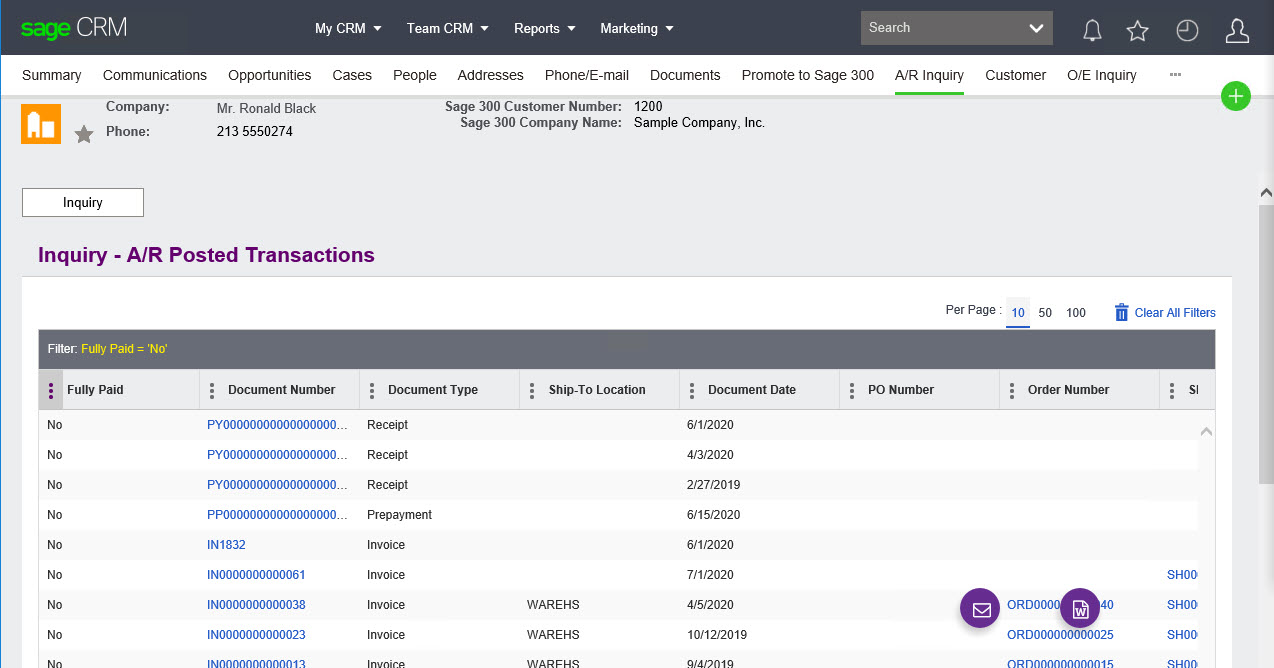
The A/R inquiry tab exposes invoice history, including filtering for paid and unpaid invoices and drilling into invoice detail.
Customer tab
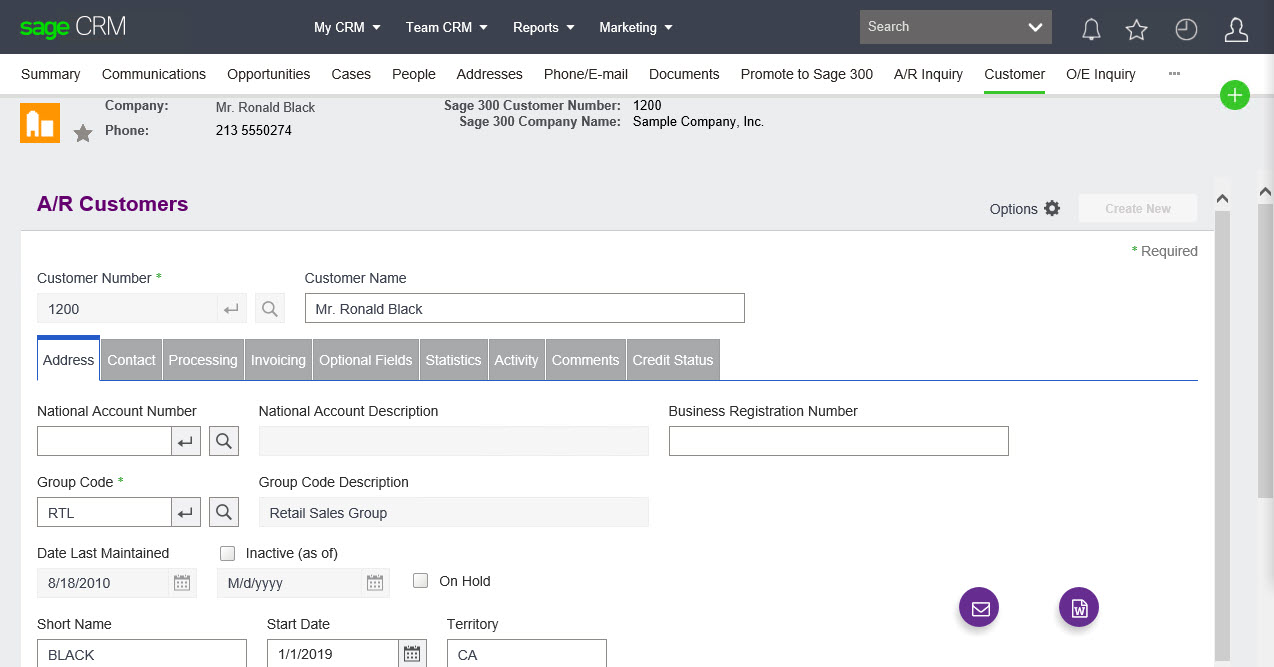
The customer tab opens the same customer screen users would normally expect in Sage 300, including credit status, optional fields, and statistics, which helps eliminate the need for front-line users to log directly into Sage 300.
Order entry
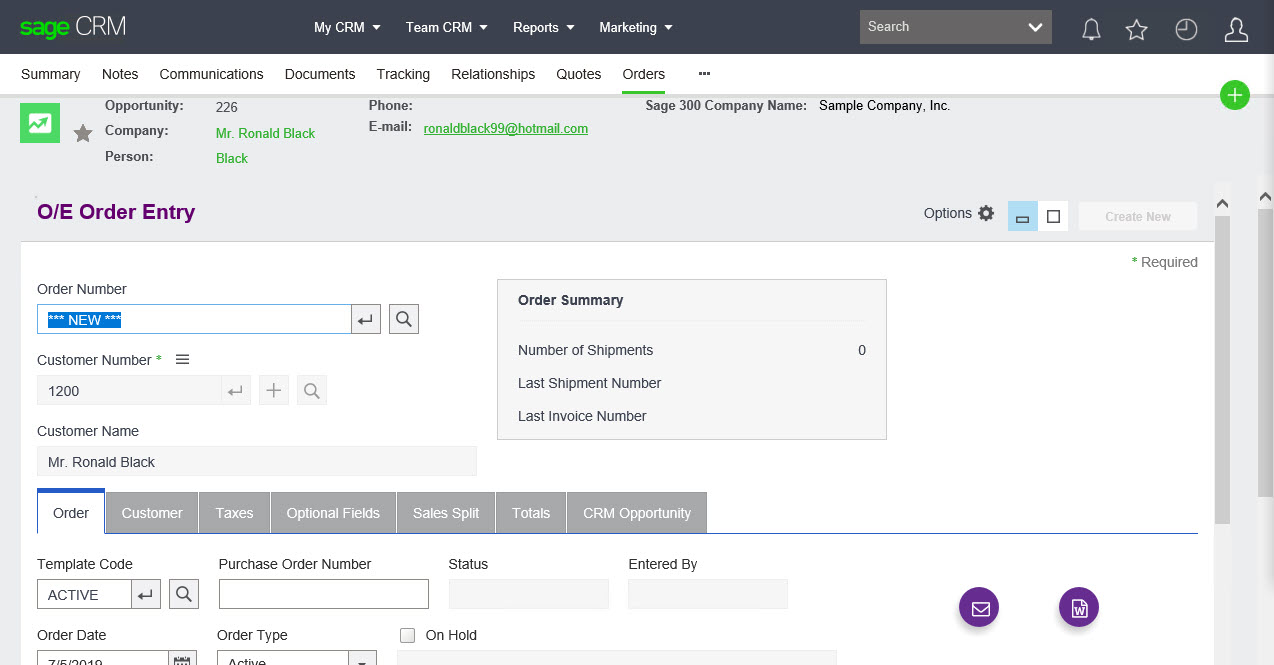
Orders can be created from an opportunity or directly from the company summary screen. When created directly, a Sage CRM opportunity is created in the background automatically.
These are Sage 300 order screens, so the native richness of Sage 300 order functionality remains available.
Vendor integration
The integration also works with vendors. Users can view key vendor details, AP history, purchase order activity, and item inventory information from within Sage CRM.
Vendor record
AP inquiry
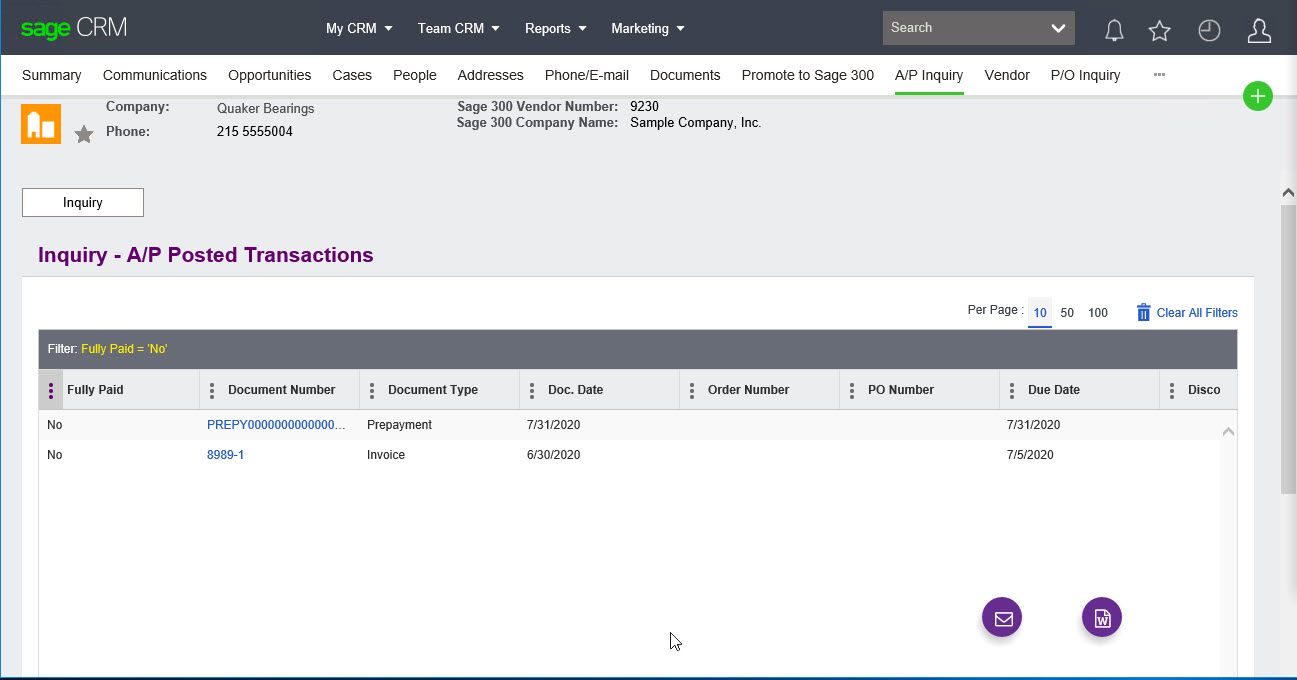
From the AP history tab, users can view document lists and drill into transactions by clicking the document number.
Purchase order inquiry
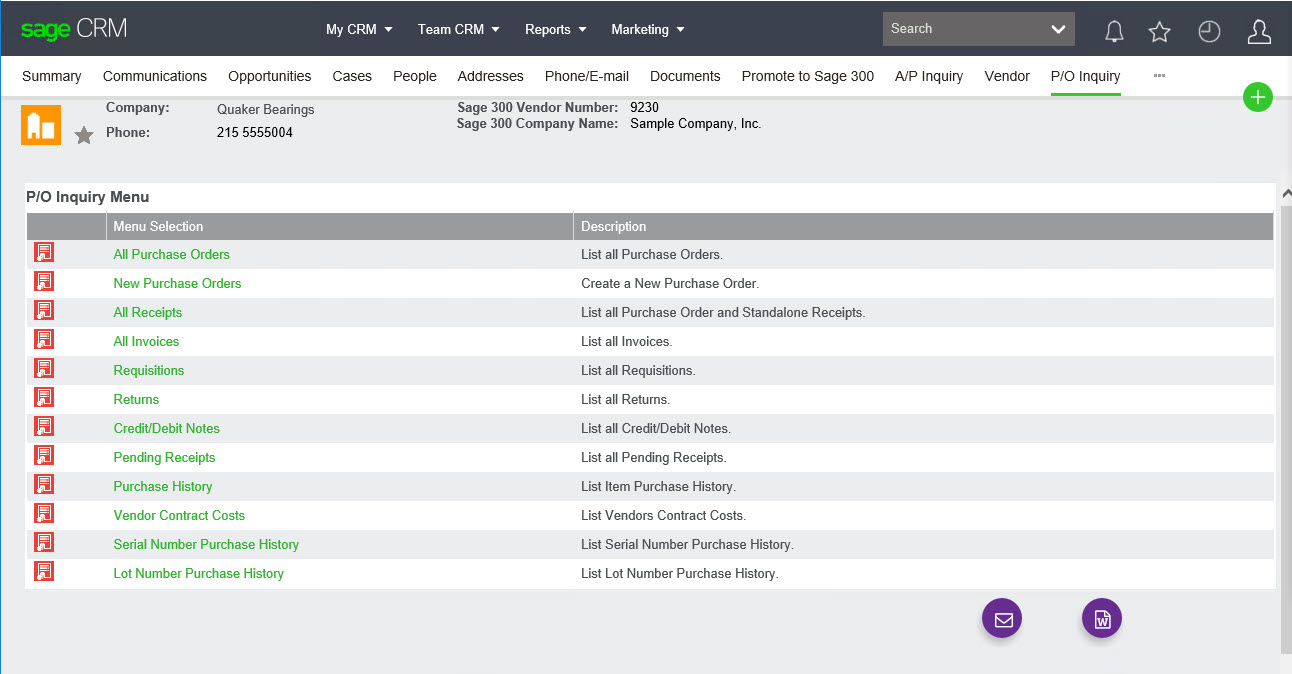
From the purchase order tab, users can review or create purchase orders.
Item inventory
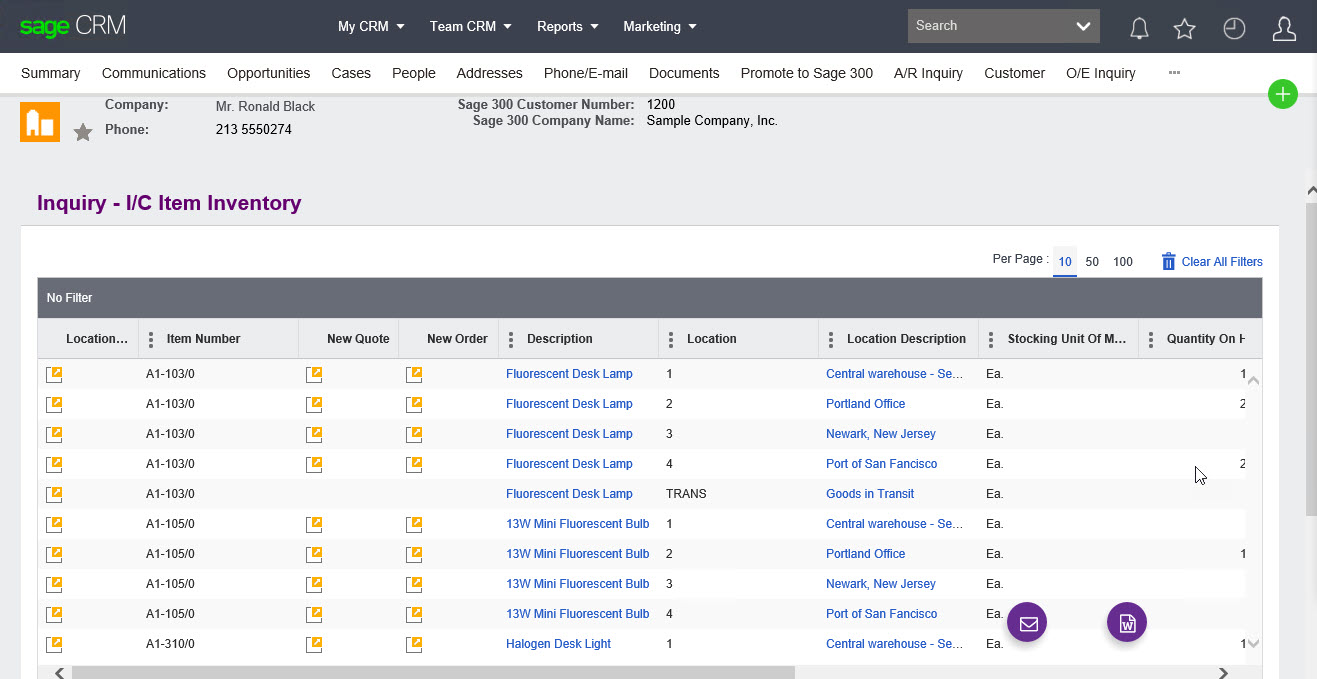
CRM users can see inventory sold to a customer, what it sold for, and even create new quotes or orders directly from that context.
Customizing the Sage 300 CRM integration
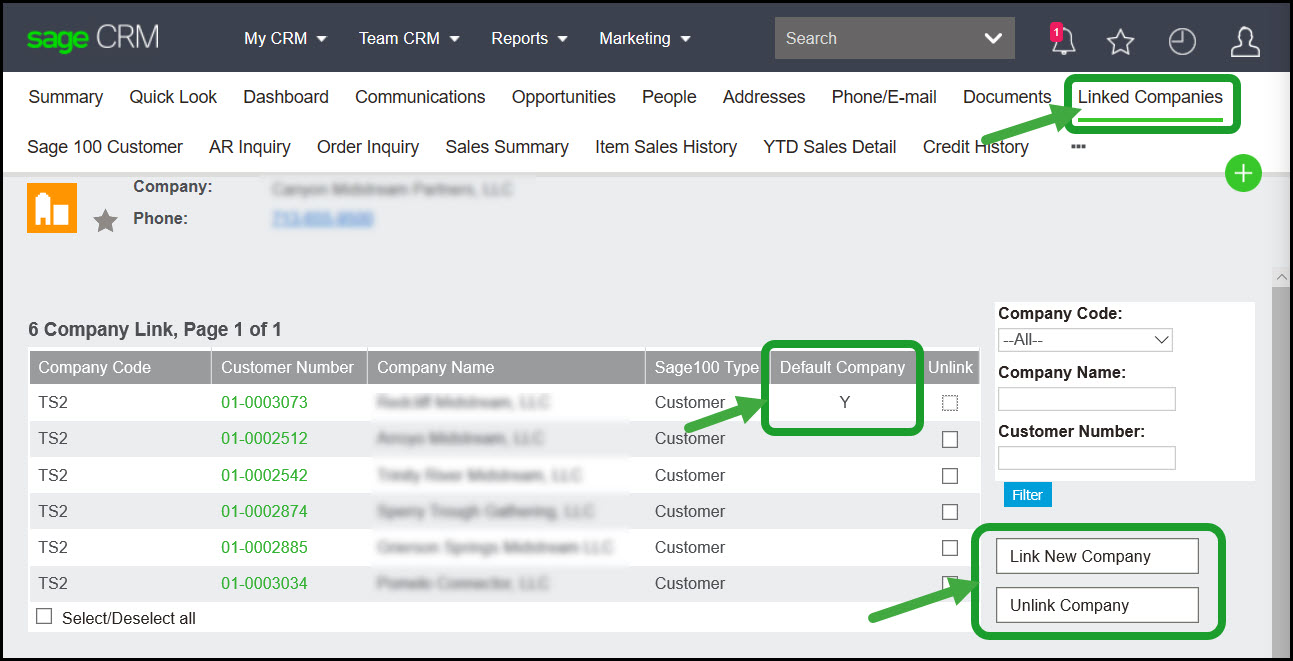
While the default Sage 300 integration is strong, organizations often request tailored behaviors. Examples in the source content include automatically bringing new customers into CRM, refreshing salesperson ownership in CRM based on Sage 300 changes, exposing more company-level fields, and supporting one-to-many company-to-customer relationships across multiple accounting databases.
Requirements
The Sage CRM to Sage 300 integration leverages Sage 300 web screens. The source states that Sage 300 web screens must be configured and that supported versions are 2019, 2020, or 2021. If Sage CRM is used outside the local network, both Sage CRM and Sage 300 web screens must be accessible over the internet.
See the compatibility chart for Sage CRM and Sage 300.